
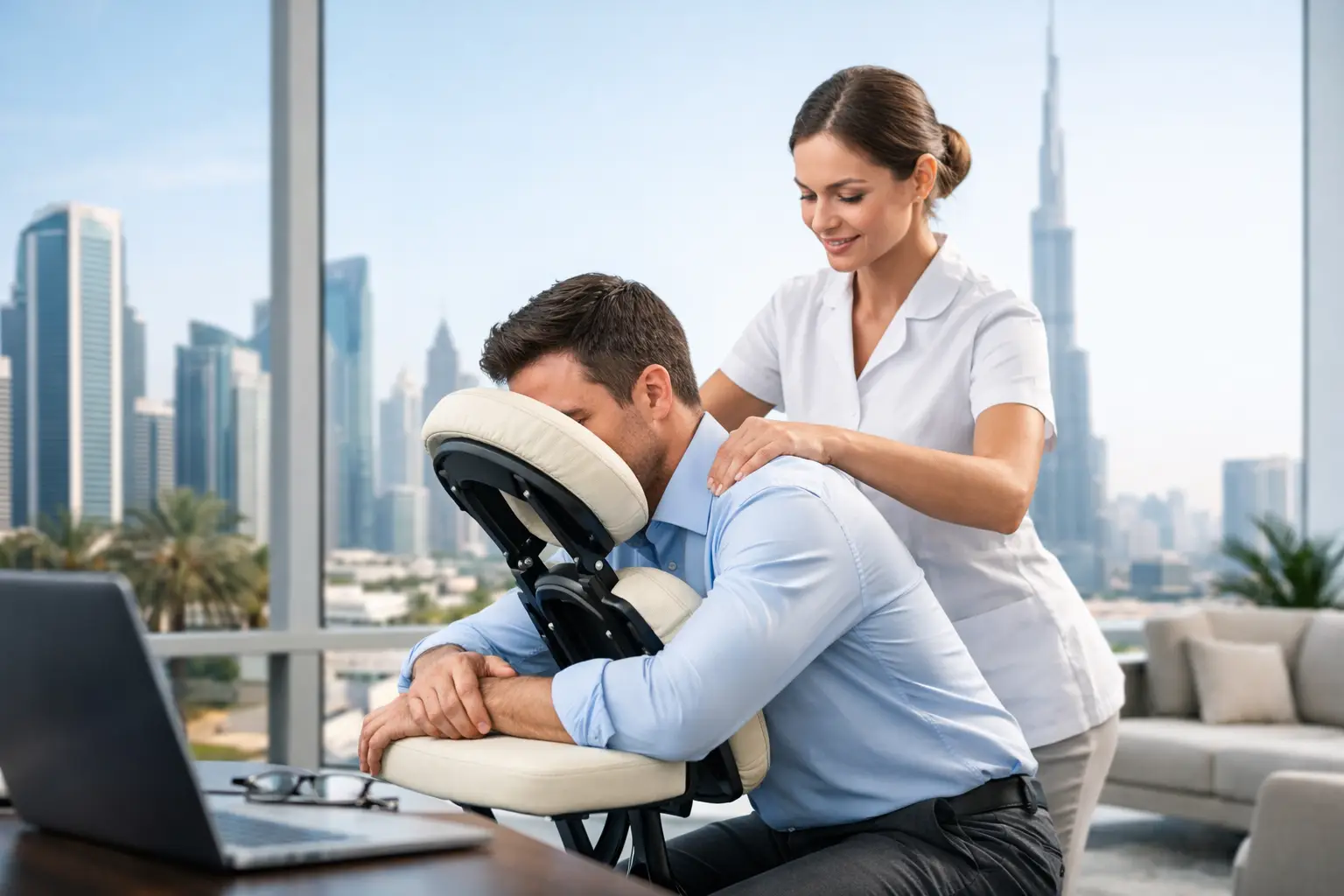
By 3 p.m., the real damage of office work usually has already set in. Your shoulders creep upward, your lower back starts arguing with your chair, and your neck feels stiff from hours of leaning toward a screen. The best massage for office workers is not simply the most popular treatment on a spa menu. It is the one that matches how your body is holding stress, where your pain is showing up, and how much pressure you actually enjoy.
For desk-bound professionals, massage works best when it is thoughtful rather than generic. Office strain tends to build in familiar places – the neck, upper back, shoulders, wrists, hips, and lower back – but the right approach depends on whether you feel dull tightness, sharp knots, mental fatigue, or full-body heaviness. A well-chosen treatment can ease tension, improve mobility, and leave you feeling noticeably lighter without overwhelming a body that is already overworked.
What makes the best massage for office workers?
Office workers usually do not need intensity for its own sake. They need precision. Long hours at a desk create a pattern of muscular imbalance: the chest tightens, the upper back weakens, the hip flexors shorten, and the neck overcompensates. That is why a massage that feels pleasant in the moment may not always be the most effective, while a highly aggressive treatment can leave some people sore when what they really needed was release and circulation.
The best choice often comes down to your main complaint. If stress sits mostly in your mind and shoulders, a calming massage with flowing pressure may be ideal. If you feel stubborn knots between the shoulder blades or pain running into the lower back, a more therapeutic style can deliver better results. If your legs feel heavy from sitting all day, stretching and pressure-point work may help restore a sense of movement.
There is also a practical consideration. Some office workers want immediate relief during a busy week, while others are looking for a more restorative spa experience that resets both body and mood. Both are valid. The right treatment should meet you where you are.
Swedish massage for office workers who need stress relief
If your workday leaves you mentally drained, tense, and generally uncomfortable rather than deeply restricted, Swedish massage is often the safest and most satisfying place to start. It uses long, gliding strokes and moderate pressure to relax the muscles, encourage circulation, and quiet the nervous system.
For many professionals, this is the massage that brings the fastest sense of overall relief. It is especially helpful when tension is widespread rather than concentrated in one painful knot. You may walk in feeling compressed and overstimulated, then leave with looser shoulders, a calmer mind, and better posture simply because your body is no longer bracing against stress.
The trade-off is that Swedish massage may not fully resolve chronic trigger points on its own. If your upper traps feel like stone or your lower back has been tight for months, you might need something more targeted. Still, for regular maintenance, it remains one of the most reliable treatments for office fatigue.
Deep tissue massage when desk tension becomes pain
When stiffness turns into actual discomfort, deep tissue massage becomes a stronger contender for the best massage for office workers. This treatment uses slower, firmer techniques to reach deeper muscle layers and release persistent tension patterns, especially in the neck, shoulders, and back.
It is particularly effective for people who sit for long stretches, carry stress in one or two chronic areas, or notice reduced range of motion. If turning your head feels restricted, if your shoulders are constantly elevated, or if your lower back tightens by the end of every workday, deep tissue work can make a meaningful difference.
That said, deeper pressure is not automatically better. If your body is highly stressed, very sensitive, or new to massage, going too intense can be counterproductive. A skilled therapist will adjust pressure to create release without leaving you guarded or sore for days. The best deep tissue session feels purposeful, not punishing.
Thai massage for stiffness from too much sitting
Office work does not just create knots. It also creates stillness. Hips become tight, the spine feels compressed, and even walking can feel less natural after a week spent moving from desk to car to sofa. Thai massage can be excellent in these cases because it combines pressure with assisted stretching and mobility-focused techniques.
For office workers who feel locked up rather than simply tense, Thai massage can restore a welcome sense of length and openness through the body. The hips, hamstrings, back, and shoulders often benefit the most. Many people describe it as feeling more mobile afterward, as if their joints and muscles are working together again.
The key consideration is preference. Some guests love the energizing, stretch-based style. Others are looking for a more cocooning, sink-into-the-table kind of relaxation. Thai massage is less about melting and more about reawakening movement, so it suits some work-stressed bodies better than others.
Aromatherapy massage for stress that feels bigger than the body
Sometimes office fatigue is not only muscular. It is mental, emotional, and cumulative. You have been on calls all day, your jaw is tight, your breathing is shallow, and even your skin feels tired. Aromatherapy massage is ideal when relaxation is the main goal and your body is responding to stress as much as posture.
With carefully selected oils and soothing massage techniques, this treatment creates a gentler but deeply restorative experience. It can help reduce that wired-but-weary feeling so common among busy professionals. If you struggle to switch off after work, aromatherapy often provides the kind of reset that stronger, more clinical massage styles cannot.
The limitation is straightforward. If you have a very specific pain issue, such as a knot under the shoulder blade or recurring lower back tension, aromatherapy alone may not be enough. It is best for those moments when your whole system needs calming.
Reflexology for tired feet, heavy legs, and full-body reset
Reflexology may seem like a surprising choice for office workers, but it can be remarkably effective. Hours of sitting can lead to sluggish circulation, tired feet, and a general sense of heaviness through the legs. Reflexology focuses on pressure points in the feet that correspond to different areas of the body, creating a treatment that feels grounding and restorative.
This can be a wonderful option if you are short on time or prefer a treatment that does not involve full-body pressure. It is also a smart add-on for professionals who travel frequently or spend part of the day standing after long periods of sitting.
Still, reflexology is usually not the first choice for someone with significant neck and shoulder pain. It works best as part of a broader wellness routine or as a targeted treatment for fatigue and tension that show up through the feet and lower body.
How to choose the right treatment for your workday tension
If you want one answer, here it is: the best massage for office workers is usually Swedish for general stress, deep tissue for chronic knots, Thai for stiffness, and aromatherapy for total relaxation. Reflexology is an excellent supporting option when fatigue settles into the feet and legs.
But real bodies are rarely that simple. Many office workers need a blend of approaches. You may want Swedish techniques to relax the body, combined with deeper work on the shoulders and lower back. You may prefer a luxurious, calming experience that still addresses one or two problem areas. That is where personalized care matters most.
At a premium spa, the value is not only the treatment name on the menu. It is the therapist’s ability to understand how your work life is showing up physically and tailor the session accordingly. At Allora Spa, that tailored approach is what turns a good massage into a genuinely restorative one.
When regular massage makes the biggest difference
A single massage can feel wonderful, but office-related tension tends to return if your routine does not change. That does not mean you need weekly appointments forever. It means consistency often works better than waiting until your body is in full protest.
For many professionals, scheduling massage as preventive care is the smartest approach. A regular session can keep shoulder tension from hardening into pain, support better circulation, and help you recover more quickly from demanding workweeks. It also creates a rare pause – a protected space where your body is allowed to soften instead of perform.
If you spend most of your day at a desk, consider massage part of how you maintain your energy, focus, and comfort, not just something you book when everything hurts. Your body keeps the score of every email, every meeting, and every hour in the same chair. Treating it well is not indulgent. It is sensible, restorative care, and often the most elegant way to feel like yourself again.

0 Comments